Enabling patients with Ulcerative Colitis (UC) to get the most out of their doctor appointments.

Project overview
Patients living with Ulcerative Colitis often enter medical appointments feeling unprepared, overwhelmed, and unsure of what to ask. After weeks of waiting, those moments with a doctor can feel rushed, making it easy to forget important symptoms or concerns. This project focused on addressing that gap—helping patients organize their thoughts, better understand their condition, and feel more confident walking into critical healthcare conversations.
My contributions
Working closely with cross-functional partners across design, content, and medical teams, I led the design of core flows and interaction patterns, defining how the experience supports patients before, during, and after appointments. Grounded in real patient behaviors, the solution was designed to guide reflection, simplify complexity, and strengthen communication. The goal was not just to deliver information, but to reduce anxiety, build clarity, and support more meaningful, real-world conversations between patients and their care teams.
Key design decisions
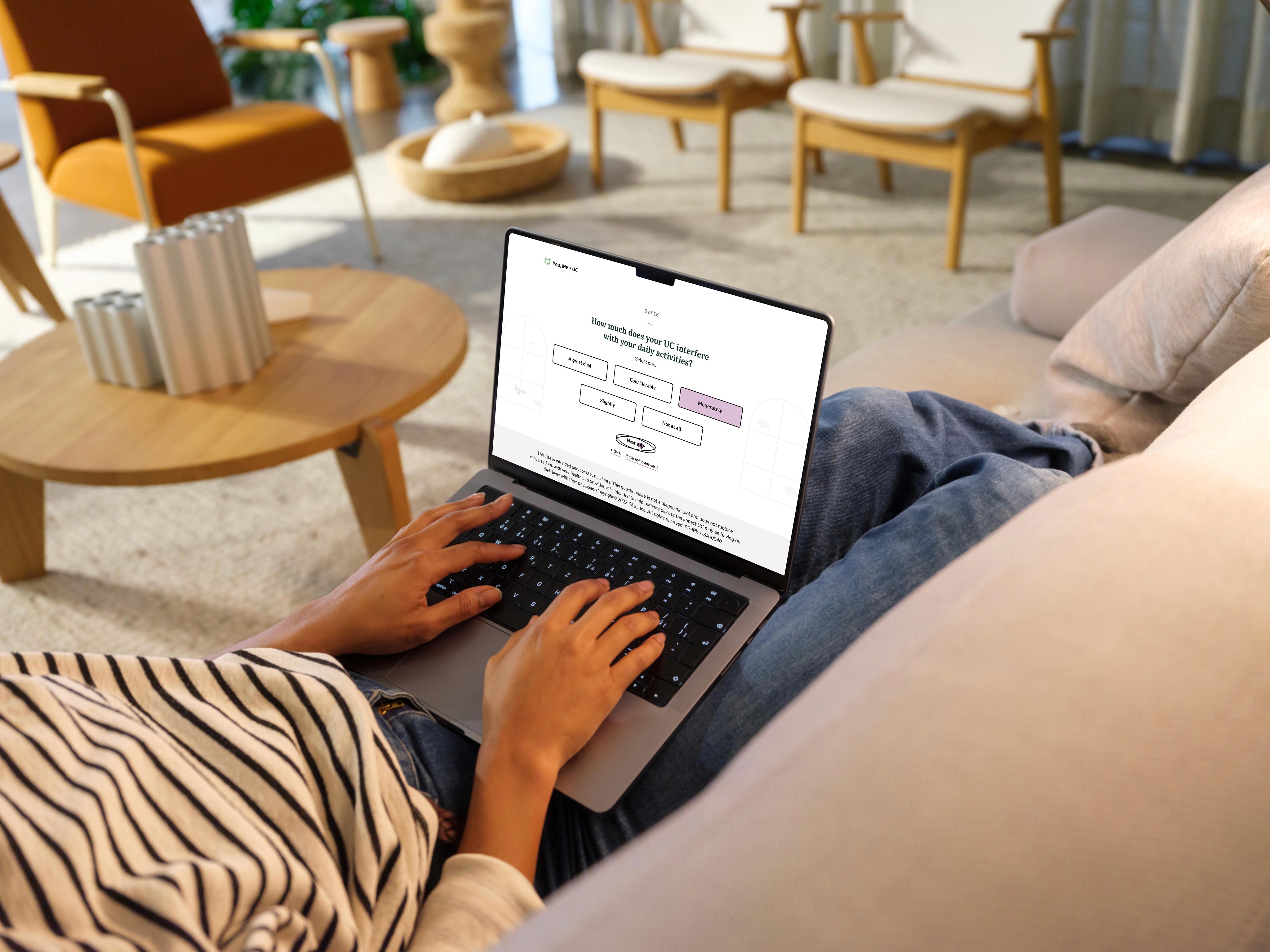
Patients often wait weeks, sometimes months, for an appointment, only to find themselves in a room where everything moves quickly. What felt clear beforehand becomes hard to articulate, and important details are easily forgotten. Designing for a chronic condition also meant balancing emotional sensitivity with clinical clarity. People bring different levels of understanding, different ways of expressing themselves, and varying comfort with medical language. Existing tools were fragmented, leaving patients to piece together symptoms, notes, and questions across multiple places. This created unnecessary friction in moments that already felt overwhelming.
The challenge was to design an experience that could meet people where they are, guide reflection without adding pressure, and fit naturally into everyday life—while still supporting meaningful, in-the-room conversations.
Impact
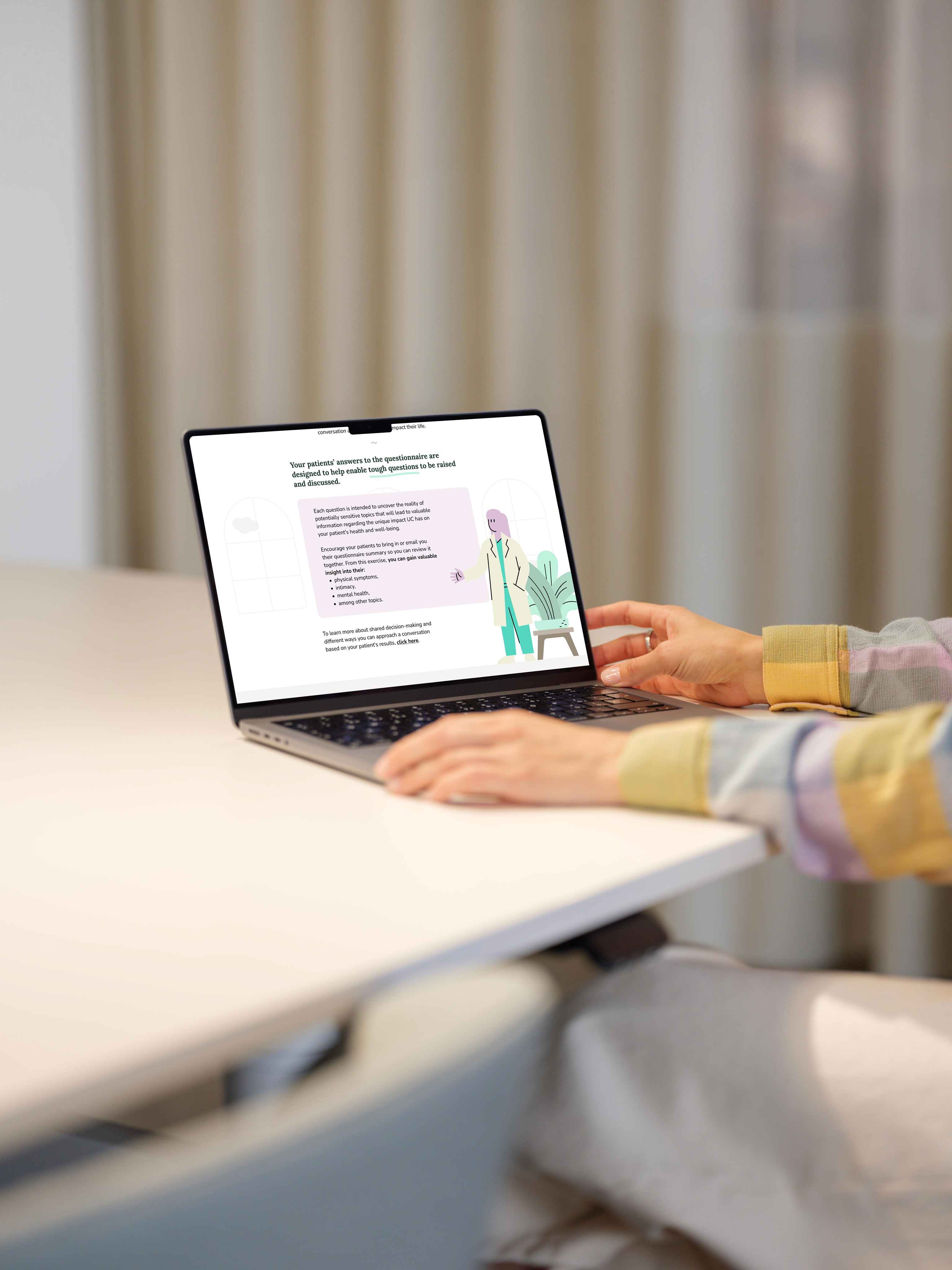
The experience introduced a more structured, patient-centered system that made complex care journeys easier to understand and navigate. Patients were able to take clearer, more meaningful action. In usability testing, participants completed key preparation tasks more consistently and with fewer errors, reporting greater clarity and less confusion heading into appointments. Engagement improved as the experience reduced friction and created a stronger sense of direction. Patients reported feeling more confident managing their care, with a clearer understanding of next steps and available resources. The introduction of illustrations helped make the experience feel more approachable and less clinical.
Reflection
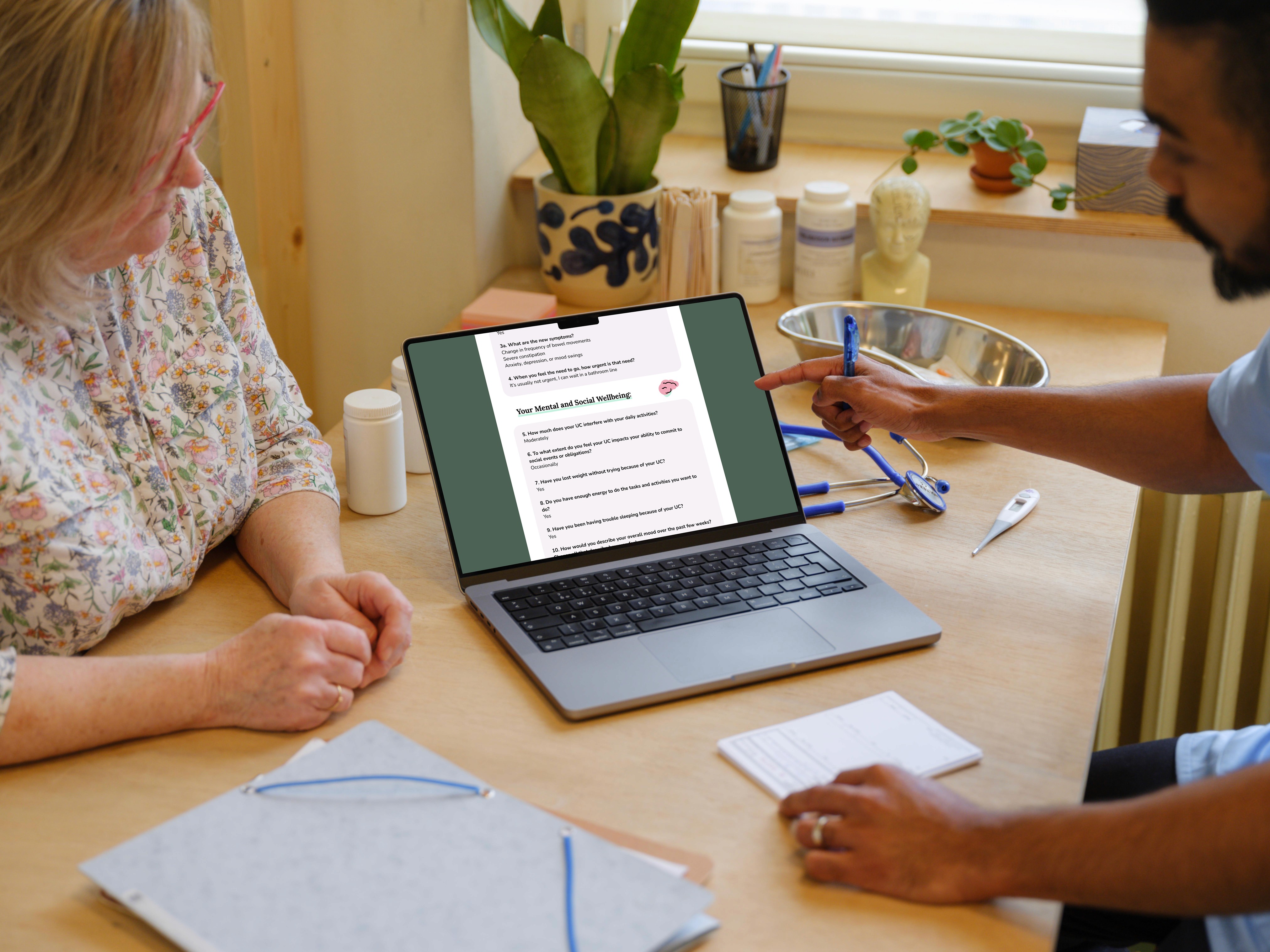
This project reinforced that designing for healthcare isn’t just about delivering information—it’s about supporting people in moments that matter. Even when tools are available, what patients often need most is help organizing their thoughts and feeling confident enough to communicate them. I learned that small moments of guidance can significantly reduce both cognitive and emotional load, especially in high-pressure situations like doctor visits. Designing for these experiences means thinking beyond the screen and considering how digital tools translate into real-world conversations. Ultimately, the most meaningful impact came from creating alignment—bringing patients and doctors onto the same page through a shared report that served as a bridge for clearer, more human conversations throughout the UC journey.


Enabling patients with Ulcerative Colitis (UC) to get the most out of their doctor appointments.
Project overview
Patients living with Ulcerative Colitis often enter medical appointments feeling unprepared, overwhelmed, and unsure of what to ask. After weeks of waiting, those moments with a doctor can feel rushed, making it easy to forget important symptoms or concerns. This project focused on addressing that gap—helping patients organize their thoughts, better understand their condition, and feel more confident walking into critical healthcare conversations.
My contributions
Working closely with cross-functional partners across design, content, and medical teams, I led the design of core flows and interaction patterns, defining how the experience supports patients before, during, and after appointments. Grounded in real patient behaviors, the solution was designed to guide reflection, simplify complexity, and strengthen communication. The goal was not just to deliver information, but to reduce anxiety, build clarity, and support more meaningful, real-world conversations between patients and their care teams.
Key design decisions
Patients often wait weeks, sometimes months, for an appointment, only to find themselves in a room where everything moves quickly. What felt clear beforehand becomes hard to articulate, and important details are easily forgotten. Designing for a chronic condition also meant balancing emotional sensitivity with clinical clarity. People bring different levels of understanding, different ways of expressing themselves, and varying comfort with medical language. Existing tools were fragmented, leaving patients to piece together symptoms, notes, and questions across multiple places. This created unnecessary friction in moments that already felt overwhelming.
The challenge was to design an experience that could meet people where they are, guide reflection without adding pressure, and fit naturally into everyday life—while still supporting meaningful, in-the-room conversations.
Impact
The experience introduced a more structured, patient-centered system that made complex care journeys easier to understand and navigate. Patients were able to take clearer, more meaningful action. In usability testing, participants completed key preparation tasks more consistently and with fewer errors, reporting greater clarity and less confusion heading into appointments. Engagement improved as the experience reduced friction and created a stronger sense of direction. Patients reported feeling more confident managing their care, with a clearer understanding of next steps and available resources. The introduction of illustrations helped make the experience feel more approachable and less clinical.
Reflection
This project reinforced that designing for healthcare isn’t just about delivering information—it’s about supporting people in moments that matter. Even when tools are available, what patients often need most is help organizing their thoughts and feeling confident enough to communicate them. I learned that small moments of guidance can significantly reduce both cognitive and emotional load, especially in high-pressure situations like doctor visits. Designing for these experiences means thinking beyond the screen and considering how digital tools translate into real-world conversations. Ultimately, the most meaningful impact came from creating alignment—bringing patients and doctors onto the same page through a shared report that served as a bridge for clearer, more human conversations throughout the UC journey.